
Drywalling plays a major role in creating smooth, durable, and visually appealing walls and ceilings. Whether it’s part of a new construction project or a renovation, proper drywall installation is essential for achieving professional results. However, many homeowners and even inexperienced contractors make mistakes during the process that can lead to visible flaws, costly repairs, and reduced durability.
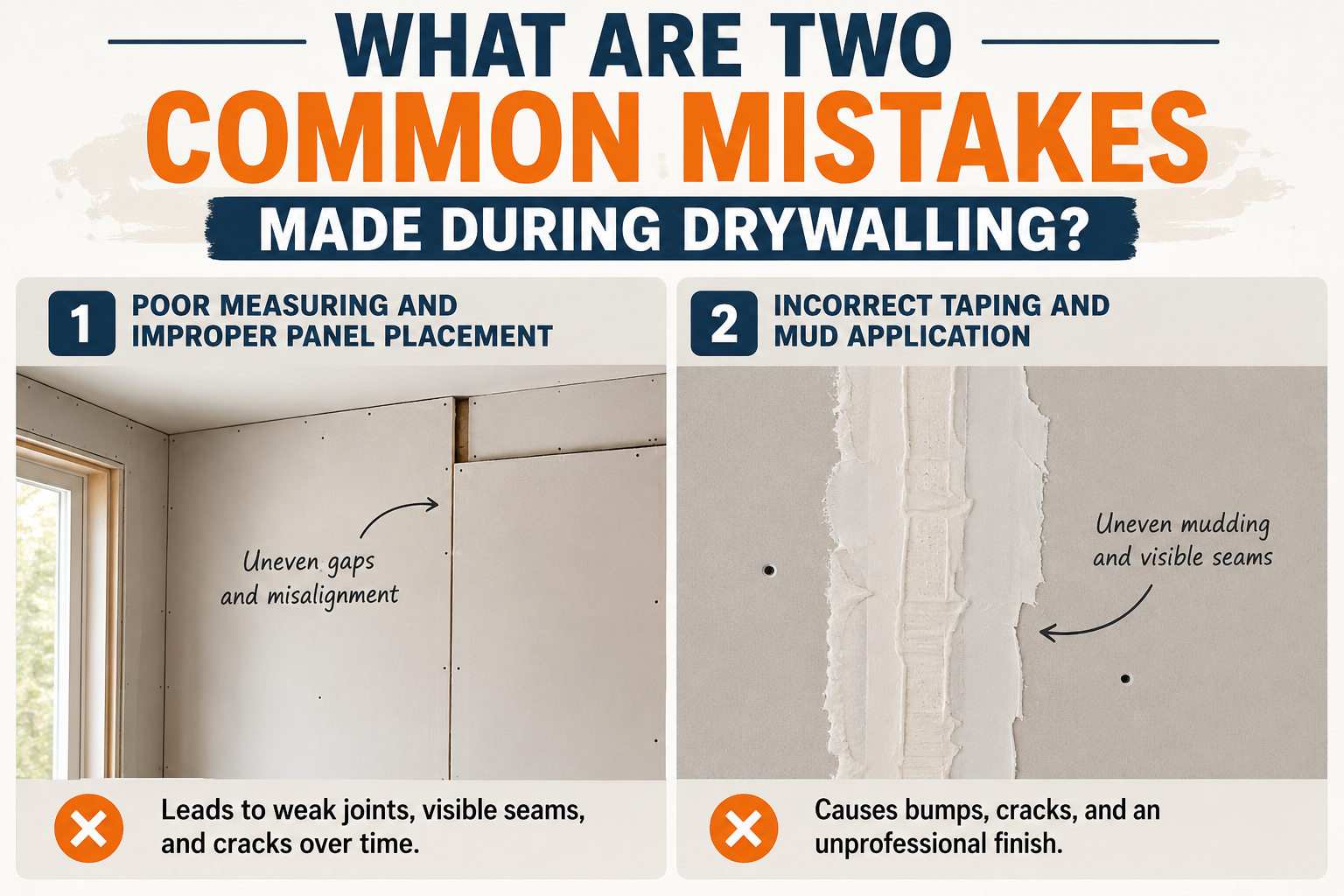
Understanding the most common drywalling mistakes can help you avoid unnecessary problems and ensure your walls remain strong and attractive for years. Below are two of the most common mistakes made during drywalling and how they can affect the final outcome.
Poor Measuring and Improper Panel Placement
One of the biggest mistakes during Drywall installation is inaccurate measuring and poor panel alignment. Drywall sheets must fit precisely to create a smooth surface. When measurements are incorrect, gaps, uneven seams, and weak joints often appear.
Why This Mistake Happens
Many people rush through the preparation stage or fail to carefully plan the drywall layout. Some installers cut panels too short, while others force oversized sheets into place. Both situations create structural and visual problems.
Improper placement can also occur when drywall seams line up incorrectly. If seams are placed too closely together or aligned without proper support, cracks may eventually develop.
Problems Caused by Poor Placement
Incorrect drywall placement can lead to several issues, including:
- Uneven wall surfaces
- Visible seams after painting
- Weak joints that crack over time
- Increased need for patchwork and sanding
- Reduced wall durability
Even small measuring errors can become noticeable once paint or texture is applied.
How to Avoid This Mistake
Proper planning is the key to successful Drywall installation. Professionals carefully measure walls and ceilings before cutting any drywall sheets. They also stagger seams whenever possible to improve strength and reduce cracking risks.
Other important tips include:
- Use accurate measuring tools
- Double-check all dimensions before cutting
- Secure drywall to properly spaced framing
- Leave minimal gaps between sheets
- Avoid forcing panels into tight spaces
Careful installation helps create a smooth finish and reduces the amount of finishing work required later.
Incorrect Taping and Mud Application
Another common drywalling mistake involves poor taping and mudding techniques. Joint compound, also known as drywall mud, is used to cover seams, screws, and joints. When applied incorrectly, the finished wall can look uneven and unprofessional.
Common Taping Errors
Many DIY installers either apply too much mud or too little. Excessive mud creates large ridges and bumps, while insufficient mud fails to properly hide joints.
Other common mistakes include:
- Using the wrong type of tape
- Failing to fully embed tape into the compound
- Applying uneven coats
- Not allowing proper drying time between layers
- Sanding too aggressively
These issues can result in bubbling tape, cracking joints, and rough wall surfaces.
Effects on the Final Finish
Improper taping and mudding often become obvious after the wall is painted. Uneven seams and sanding marks can ruin the appearance of an otherwise well-built room.
Poor finishing may also weaken the drywall structure over time. Cracks and loose tape can eventually require expensive repairs and repainting.
How Professionals Prevent These Problems
Experienced drywall contractors understand the importance of patience and technique during the finishing process. They apply multiple thin coats of joint compound rather than one thick layer. This approach creates a smoother surface and minimizes sanding.
Professional Drywall installation also includes:
- Properly embedding tape into the first coat
- Allowing each layer to dry fully
- Using quality finishing tools
- Sanding lightly for a smooth appearance
- Inspecting surfaces under proper lighting
Attention to detail during the finishing stage makes a significant difference in the final result.
Additional Drywalling Mistakes to Avoid
While measuring and finishing errors are among the most common, several other drywall mistakes can also impact quality.
Using the Wrong Drywall Type
Different rooms require different drywall materials. Moisture-resistant drywall is ideal for bathrooms and kitchens, while fire-rated drywall may be required in garages or utility spaces.
Using the wrong product can shorten the lifespan of the walls and lead to moisture damage or safety concerns.
Improper Screw Placement
Drywall screws must be installed correctly to secure panels without damaging the paper surface. Screws driven too deep weaken the drywall, while shallow screws may protrude through the surface.
Proper spacing is also important for maintaining structural stability.
Skipping Surface Preparation
Walls should be clean, dry, and properly framed before drywall installation begins. Uneven framing or hidden moisture problems can affect the finished appearance and durability of the drywall.
Why Professional Drywall Installation Matters
Although drywalling may appear simple, achieving smooth and long-lasting results requires experience, precision, and proper tools. Professional contractors know how to avoid common mistakes and ensure every step of the process is completed correctly.
Hiring experts for Drywall installation offers several benefits:
- Better wall appearance
- Reduced risk of cracks and damage
- Faster project completion
- Proper finishing techniques
- Long-term durability
Professionals can also identify underlying structural issues before installation begins, helping prevent future repairs.
Tips for Successful Drywall Projects
If you are planning a drywall project, following best practices can improve the outcome significantly.
Plan Carefully
Take accurate measurements and create a clear layout before starting. Good planning reduces waste and prevents installation problems.
Use Quality Materials
High-quality drywall panels, screws, tape, and joint compound help create stronger and smoother walls.
Work in Proper Conditions
Humidity and temperature can affect drying times and material performance. Ensure the workspace is properly ventilated and climate-controlled when possible.
Take Your Time
Rushing through drywall work often leads to visible mistakes. Allow adequate drying time between coats and inspect all surfaces carefully before painting.
Conclusion
Drywalling mistakes can greatly affect the appearance, strength, and lifespan of walls and ceilings. Two of the most common problems during Drywall installation are poor measuring and placement, along with incorrect taping and mud application. These errors often lead to uneven surfaces, visible seams, cracking, and expensive repairs.
By understanding these common mistakes and following proper installation techniques, homeowners and contractors can achieve cleaner, smoother, and more durable results. Whether you handle the project yourself or hire professionals, careful planning and attention to detail are essential for successful drywall work.